Digital solutions for sustainable development
Track 21
Track chairs

Marc-Fabian Körner
SnT, University of Luxembourg

Juuli Lumivalo
Faculty of Information Technology, University of Jyväskylä
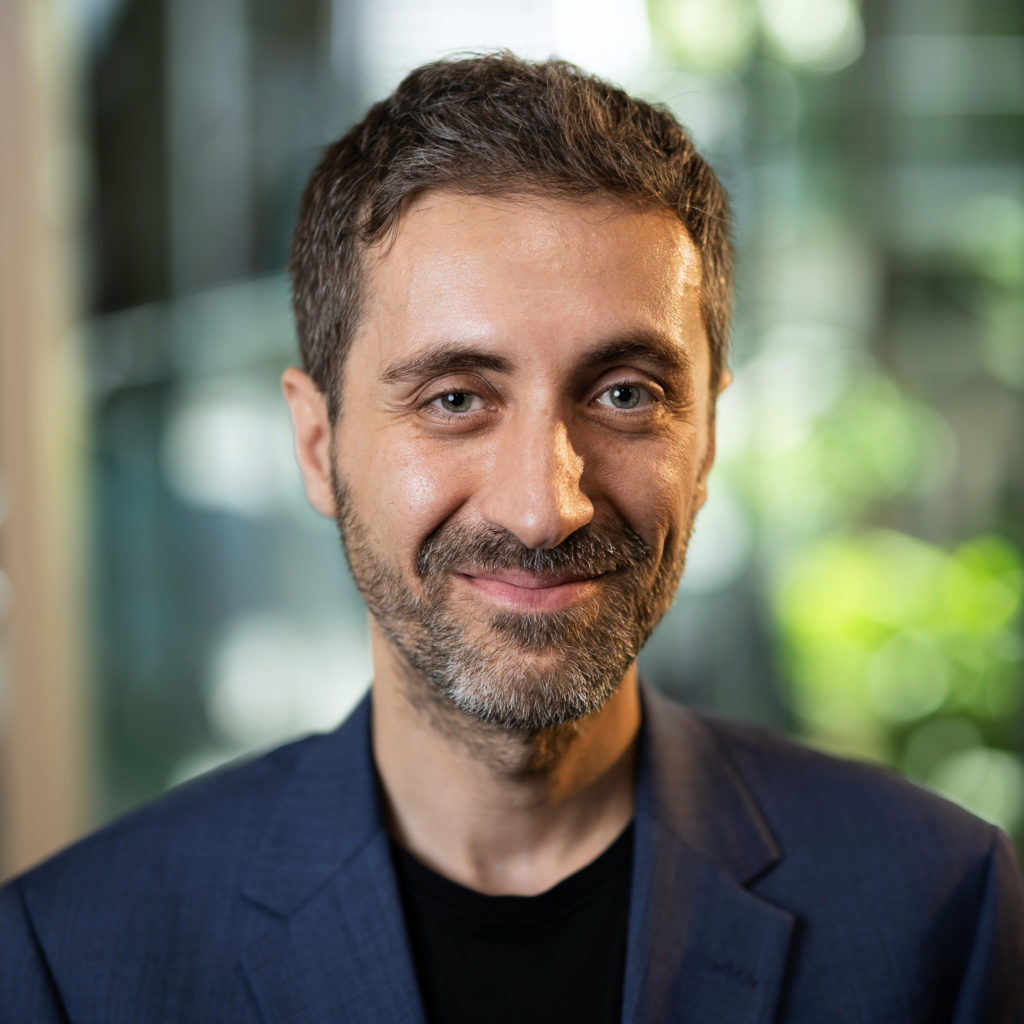
Kenan Degirmenci
Queensland University of Technology
Track description
As the climate crisis accelerates, there is an urgent need for innovative strategies and digital solutions to decarbonise, adapt, and build environmental, social, and economic sustainability. Information Systems (IS) research is central to this endeavor, informing the design, implementation, and transformation of digital solutions that shape pathways toward sustainable development (Fuldauer et al., 2022; Boh et al., 2023). The IS community plays a pivotal role, not only by reducing the environmental footprint of information systems, but also examining how digital technologies can serve as critical enablers of sustainable solutions in business, society, and the public sector (Melville, 2010; Watson et al., 2010; Gholami et al., 2016).
Designing and implementing innovative and effective solutions for sustainability is a scholarly, societal, and moral imperative. Advancement towards the holistic objectives of sustainability demands rigorous understanding and actionable insights into the challenges and opportunities presented by rapid digitalisation (Soergel et al., 2021; Seidel et al., 2017). While no single discipline can solve these Grand Challenges alone (Gholami et al., 2016), IS research is uniquely positioned to offer substantive contributions by bridging knowledge, theory, and practice (Elliot, 2011; Melville, 2010).
This track recognises the significant and dynamic role IS can play in enabling sustainable outcomes, not only by lessening its own environmental footprint but by driving transformation at multiple levels and across industries. Digital innovations, platforms, and data-driven decision support can shape sustainable business models, energy and mobility transitions, and collaboration across sectors. There is a timely opportunity to uncover how micro-level IS-enabled choices aggregate into macro-level sustainability impacts and vice versa. A key challenge lies in understanding how individual behaviours, decisions, and perceptions interact with system-level dynamics to shape sustainability outcomes. This includes examining feedback loops, temporal and social trade-offs, and the role of digital technologies in mediating decision-making under uncertainty.
The track is closely aligned with AIS Special Interest Group on Green IS (SIG Green), recognising our dual responsibility to minimise the environmental impact of IS and catalyse change across sectors. We welcome contributions spanning the spectrum of IS research, including foundational theory, methodology, case studies, and cross-disciplinary collaborations. Hence, this track invites contributions that extend the boundaries of IS research for sustainability. Empirical research drawing on diverse organisational, societal, and geographical contexts (including often overlooked regions (Boh et al., 2023)) as well as drawing on local and Indigenous perspectives, will enrich our understanding of how sustainability objectives are enacted in practice. Submissions that foster our understanding of collaborative value co-creation, green digital innovation, and systemic trade-offs are encouraged, as are those illuminating real-time feedback, behavioral change, and long-term transformation.
Through this track, we call for submissions that are conceptually innovative, empirically robust, methodologically rigorous, and that engage substantively with the IS discipline. By situating IS at the intersection of societal, environmental, and ethical considerations, this track offers a platform for research that is capable of driving meaningful scholarly and societal impact.
Topics of interest
- Design and implementation of information systems for ecological and social challenges
- Green IS innovations in energy, mobility, and infrastructure sectors
- Value co-creation, sufficiency policies, and sustainable business model transformation via IS
- Emerging IS technologies (e.g., AI, IoT, blockchain) for climate action and SDG advancement
- Power, transparency, and accountability in digital sustainability systems
- Micro-to-macro perspectives: IS-enabled behaviour change and systemic sustainability impacts
- Agentic AI and decision support for sustainable behaviour
- Adoption paradoxes in sustainable technologies (e.g., solar, EVs, VPPs)
- Human–AI interaction in sustainability contexts
- Platforms, digital ecosystems, and data-sharing for sustainability
- Circular economy models and closed-loop systems enabled by IS
- How IS design, implementation and use can move us from sustainable to flourishing societies
- How local and Indigenous knowledge perspectives can improve understanding and action with respect to digital sustainability
- Digital technology as a mediator in the human-nature relationship and implications for sustainability
- Mitigating negative consequences of digital technologies in shaping sustainability representations, e.g., greenwashing
Associate editors
Lars Andraschko
ESSEC Business School
Chadi Aoun
Carnegie Mellon University
Banu Aysolmaz
Eindhoven University of Technology
Marten Borchers
University of Hamburg
Ignatius Chukwudi
Queensland University of Technology
Claris Chung
University of Canterbury
Jacqueline Corbett
Université Laval
Jenny Elo
Tampere University
Mahdi Fahmideh
University of Southern Queensland
Roya Gholami
University of Illinois Springfield
Georgina Guillen
Tampere University
David Herold
Queensland University of Technology
Slawka Jordanow
Saarland University
Robert Keller
Kempten University of Applied Sciences
Jeanine Kirchner-Krath
University of Koblenz
Anna Krombacher
University of Bayreuth
Stephanie Missonier
University of Lausanne
Elaine Mosconi
Université de Sherbrooke
Xue Nancy Ning
University of Wisconsin
Roxana Ologeanu-Taddei
University of Montpellier
John Rios
University of Georgia
Shahrzad Roohy Gohar
University of Queensland
Anika Schröder
IT-University of Copenhagen
Philipp Staudt
Karlsruhe Institute of Technology
Franz Strich
Paderborn University
Sanna Tiilikainen
University of Galway
Oktay Turetken
Eindhoven University of Technology
Hendrik Wache
ICN Business School
Cancan Wang
IT-University of Copenhagen
Pauline Weritz
University of Twente
Oliver Werth
Federal University of Applied Administrative Sciences
Yixin Zhang
University of Gothenburg
Philipp zur Heiden
Paderborn University