Algorithmic management and decision-making
Track 4
Track chairs

Armin Alizadeh
TU Darmstadt
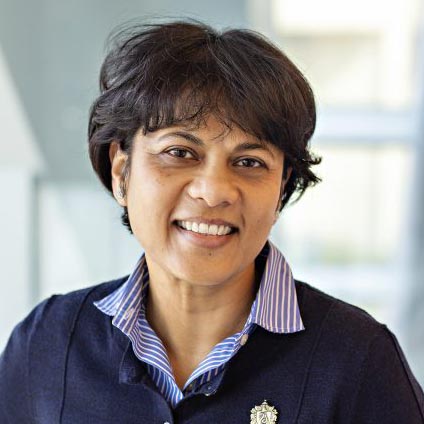
Monideepa Tarafdar
University of Massachusetts Amherst

Ulrich Remus
University of Innsbruck
Track description
Digital technologies are rapidly changing how organisations manage work. Algorithms increasingly augment managerial decision-making by assisting or collaborating with their human counterparts (Leavitt et al., 2025; Tarafdar et al., 2023), but they also automate managerial processes entirely by directly coordinating and controlling workers (Möhlmann et al., 2021; Kellogg et al., 2020). Algorithmic decision-making and management can offer substantial benefits to organisations, enabling efficient scaling of business models and operations (Benlian et al., 2022). For example, in platform-based companies such as Uber, intelligent algorithms take on the role of human managers by selecting and replacing workers as needed, assigning tasks, and providing detailed feedback on daily work behavior (Möhlmann et al., 2021). But algorithmic decision-making and management are now also commonplace in traditional organisational contexts. A global OECD survey of 6,047 firms found that 74% already use at least one algorithmic management tool to instruct, monitor, or evaluate their employees (Milanez et al., 2025). Yet, by algorithmically determining who receives tasks, who advances, and ultimately who can participate in the organization at all, algorithmic management does not merely make management more efficient; it draws new digital borders within and around organizations, shaping access, opportunity, and the voice of those being algorithmically managed.
This track focuses on the implications of algorithmic decision-making and management for organisations, workers, managers, and how these actors make sense of, respond to, and cope with increasingly automated management systems (Lippert et al., 2026; Weber et al., 2025). We invite submissions that examine how algorithmic management reconfigures existing agency and power structures (Hillebrand et al., 2025; Wood 2024), how it leads to hybrid control configurations (Hao et al., 2026), how human managers navigate their coexistence with algorithmic counterparts (Jarrahi et al., 2021), and how workers retain agency and voice within algorithmically managed organisations (Hsieh et al., 2025). We also welcome contributions that address the ethical design of algorithmic management systems and related policymaking (Gal et al., 2020; Spiekermann et al., 2022). Finally, we invite research on how algorithmic management and its organisational embedding (Alizadeh et al., 2025) affect worker well-being (Tarafdar et al., 2023), and how workers push back through algoactivistic practices (Jiang et al., 2021).
We welcome contributions from all theoretical and methodological perspectives, drawing on IS, management, and neighboring disciplines, and addressing individual, organisational, and societal levels of analysis.
Topics of interest
Topics and questions relevant to the track include, but are not limited to:
Conceptual nature of algorithmic management
- What are the novel features and affordances of algorithmic management systems, and how can their key dimensions be conceptualised across different work contexts?
- How do emerging technological developments (such as generative agentic AI) impact our conceptual understanding of algorithmic management?
Algorithmic management and digital borders
- How does algorithmic management reconfigure power and social structures (such as the worker-manager and worker-worker relationships), and what new forms of inclusion and exclusion does it produce?
- What technical, organisational, and governance measures are needed to ensure that algorithmic management systems foster rather than undermine meaningful connectivity within organisations?
- How can participatory approaches to algorithmic management bridge tensions between workers, managers, and the systems that mediate their relationships?
Design of algorithmic management systems
- How do organisations design, deploy, and adapt algorithmic management systems, and how can workers be meaningfully involved in these processes?
- What ethical principles should guide the development and use of algorithmic management systems, and how can organisations and policymakers effectively govern them?
Organisational implications of algorithmic management
- What are the enabling and inhibiting factors for the adoption and use of algorithmic management systems?
- How can (traditional) organisations decide on the ‘right’ division of labor between human and algorithmic managers?
- In what ways do algorithmic systems serve as “organisational memory,” and how does this affect issues of accountability and transparency?
Managerial implications of algorithmic management
- What new roles and competencies emerge for human managers coexisting with algorithmic counterparts?
- What skills do managers need to effectively navigate algorithmically managed environments?
Worker-level implications of algorithmic management
- How does algorithmic management shape group dynamics, team cohesion, and collective identity among workers?
- What are the effects of algorithmic management on worker performance, well-being, and agency?
- Under what conditions do algorithmic management systems empower workers (e.g., by enabling self-management, voice, or collective bargaining)?
Associate editors
Martin Adam
University of Göttingen, Germany
Umair Azka
University of Galway, Ireland
Alexander Benlian
TU Darmstadt, Germany
Liwei Chen
University of Cincinnati, USA
W. Alec Cram
University of Waterloo, Canada
Carolina Alves De Lima Salge
University of Georgia, USA
Lisa Marie Giermindl
Zurich University of Applied Sciences, Switzerland
Hui Hao
University of Memphis, USA
Tatjana Hödl
University of Bern, Switzerland
Nura Jabagi
Université Laval, Canada
Panagiotis Keramidis
Norwegian University of Science and Technology
Miriam Klöpper
Norwegian University of Science and Technology, Norway
Bastian Molinaro
LMU Munich, Germany
Josephine Moritz
University of Münster, Germany
Long The Nguyen
Washington State University, USA
Joseph Taylor
California State University, Sacramento, USA
Bart Van den Hooff
Vrije Universiteit Amsterdam, Netherlands
Matthias Weber
University of Innsbruck, Austria
Martin Wiener
TU Dresden, Germany
Lior Zalmanson
Tel Aviv University, Israel
References
Alizadeh, A., Wiener, M., & Benlian, A. (2025). A multi-layered perspective on algorithmic control systems: Managerial design choices and worker legitimacy judgments. European Journal of Information Systems, 0(0), 1–26. https://doi.org/10.1080/0960085X.2025.2576230
Benlian, A., Wiener, M., Cram, W. A., Krasnova, H., Maedche, A., Möhlmann, M., Recker, J., & Remus, U. (2022). Algorithmic management: Bright and dark sides, practical implications, and research opportunities. Business & Information Systems Engineering, 64(6), 825-839.
Gal, U., Jensen, T. B., & Stein, M. K. (2020). Breaking the vicious cycle of algorithmic management: A virtue ethics approach to people analytics. Information and Organization, 30(2), 100301.
Hillebrand, L., Raisch, S., & Schad, J. (2025). Managing with artificial intelligence: An integrative framework. Academy of Management Annals, 19(1), 343–375. https://doi.org/10.5465/annals.2022.0072
Hao, H., Tarafdar, M. & Hess, T. J., (2026). A Partitioning Model of Control for Digital Labor Platforms. Journal of the Association for Information Systems, 27(3), 624-654. https://doi.org/ 10.17705/1jais.00981
Hsieh, J., Zhang, A., Surati, S., Xie, S., Ayala, Y., Sathiya, N., Kuo, T.-S., Lee, M. K., & Zhu, H. (2025). Gig2Gether: Datasharing to empower, unify and demystify gig work. Proceedings of the 2025 CHI Conference on Human Factors in Computing Systems, 1–25. https://doi.org/10.1145/3706598.3714398
Jarrahi, M. H., Newlands, G., Lee, M. K., Wolf, C. T., Kinder, E., & Sutherland, W. (2021). Algorithmic management in a work context. Big Data & Society, 8(2), 1-14.
Jiang, J., Adam, M., & Benlian, A. (2021). Algoactivistic practices in ridesharing – A topic modeling & grounded theory approach. Proceedings of the 29th European Conference on Information Systems (ECIS), Marrakech.
Kellogg, K. C., Valentine, M. A., & Christin, A. (2020). Algorithms at work: The new contested terrain of control. Academy of Management Annals, 14(1), 366-410.
Leavitt, K., Barnes, C. M., & Shapiro, D. L. (2025). The role of human managers within algorithmic performance management systems: A process model of employee trust in managers through reflexivity. Academy of Management Review, 50(4), 745–767. https://doi.org/10.5465/amr.2022.0058
Lippert, I., Alizadeh, A., Tarafdar, M., Mohlmann, M., Benlian, A., Parent-Rocheleau, X., & Stein, M.-K. (2026). One decade of algorithmic management research. Business & Information Systems Engineering. https://doi.org/10.1007/s12599-026-00995-1
Milanez, A., Lemmens, A., & Ruggiu, C. (2025). Algorithmic management in the workplace: New evidence from an OECD employer survey. OECD Artificial Intelligence Papers, No. 31 (February 6). https://doi.org/10.1787/287c13c4-en
Möhlmann, M., Zalmanson, L., Henfridsson, O., & Gregory, R. W. (2021). Algorithmic management of work in online labor platforms: When matching meets control. MIS Quarterly, 45(4), 1999-2022.
Spiekermann, S., Krasnova, H., Hinz, O., Baumann, A., Benlian, A., Gimpel, H., Heimbach, I., Köster, A., Maedche, A., Niehaves, B., Risius, M., & Trenz, M. (2022). Values and ethics in information systems: A state-of-the-art analysis and avenues for future research. Business & Information Systems Engineering, 64(2), 247-264.
Tarafdar, M., Page, X., & Marabelli, M. (2023). Algorithms as co-workers: Human algorithm role interactions in algorithmic work. Information Systems Journal, 33(2), 232-267.
Weber, M., Remus, U., Geiger, M., & Cram, W. A. (2025). Between proactive and reactive coping: How food delivery workers cope with algorithmic management threats. European Journal of Information Systems, 0(0), 1–29. https://doi.org/10.1080/0960085X.2025.2558598
Wood, A. (2024). Algorithmic management: From technology to politics and theory. Weizenbaum Journal of the Digital Society, 4(3). https://doi.org/10.34669/wi.wjds/4.3.9