Digital transformation: new perspectives and emerging insights
Track 13
Track chairs
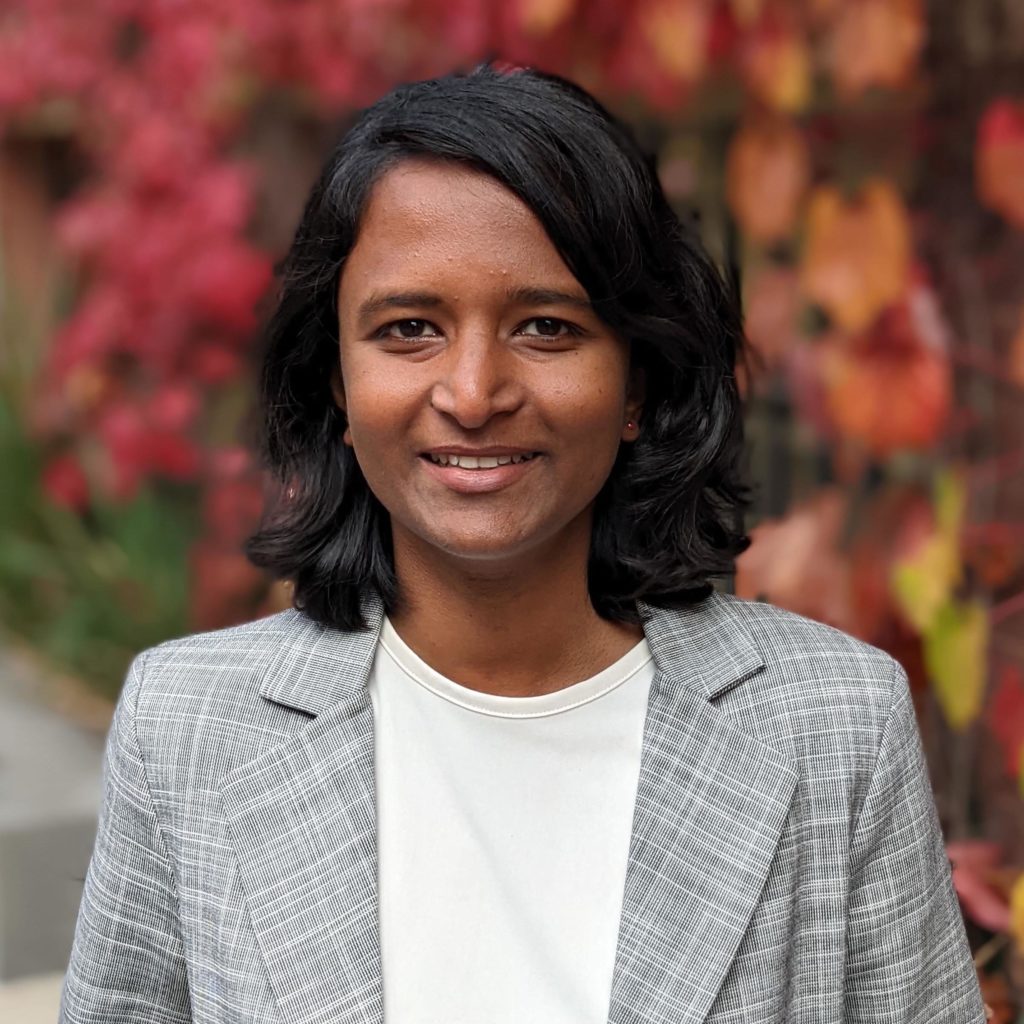
Malshika Dias
The University of Sydney

Roxana Ologeanu-Taddei
University of Montpellier

Markus P. Zimmer
University of Agder
Track description
Digital transformation continues to be a central and evolving topic in Information Systems research (c.f. Carroll et al. 2023; Vial, 2019). However, scholars have called for a more systematic understanding of digital transformation including developing strong theoretical foundations, studying multi-level dynamics, strategising, and emerging forms of organizing and work within and across different digital transformation domains (c.f. Braa et al., 2023; Markus & Rowe, 2023; Wessel et al. 2025). These calls built on but also move beyond existing scholarship.
Existing scholarship has examined digital transformation as a process of socio-technical change at societal level (Braa et al., 2023; Ngwenyama et al., 2026) and the organizational level (Vial, 2019; Wessel et al., 2021). Scholars theorized digital transformation as a societal-level design problem (Braa et al., 2023), in relation to strategy making (Chanias et al., 2019), digital innovation and value creation (Svahn et al., 2017), and the nature of work (Baptista et al., 2020; Zimmer et al., 2023a; Zimmer & Gierlich-Joas, 2026). They also explored how it becomes normalised and sustained (Carroll et al., 2021, 2023), emerges from interactions among multiple actors (Baiyere et al., 2025), and can be framed as responsible or sustainable (Ologeanu-Taddei et al., 2025; Zimmer et al., 2023b). Consequences of digital transformation are reflected in changes to business and IT strategy, organizational structures, firm performance, or broader organisational and societal outcomes (Matt et al., 2015; Baiyere et al., 2020; Hanelt et al., 2021; Ngwenyama et al., 2026; Weritz et al., 2024). Taken together, existing scholarship theorises digital transformation as a multi-faceted, multi-level phenomenon of socio-technical change yet also reveals this conception as fragmented and evolving (Markus & Rowe, 2023; Wessel et al., 2025; Wiener et al. 2025).
Thus, this track calls for submissions that engage in further theorizing mechanisms, dynamics, and tensions of digital transformation, and explore how digital transformation shapes organizing, processes, and work across domains. Such theorizing can evolve from existing research trajectories but also requires critically rethinking them (Baiyere et al., 2026; Rowe & Markus, 2023; Wessel et al., 2025). Therefore, while inviting submissions that continue advancing established research traditions, we encourage contributions that rethink digital transformation. This rethinking can focus on developing novel, contrarian perspectives that challenge established explanations (Zimmer et al., 2026), or engaging with complementary methodological approaches, including forward-looking perspectives (Hovorka &Mueller, 2025). This rethinking of digital transformation is in line with the conference theme “Bridging Digital Borders”, because to understand how digital transformation bridges borders between domains, industries, levels of analysis, or the past, present, and futures of socio-technical change, we require new perspectives regarding theory, methodology, and phenomena to understand the nuances in digital transformation process and outcomes within and across different levels of analysis (i.e., societal or organisational) and domains (i.e., private, public, non-profit, etc.).
Seeking to continue existing research traditions and to venture beyond, we welcome submissions from all theoretical and methodological perspectives (i.e. qualitative, quantitative, design-oriented, conceptual, or critical), investigating digital transformation in various domains. In line with the conference theme, we specifically encourage submissions that rethink or retheorise digital transformation within and across these domains.
Please note that non-IS submissions to this track will be desk-rejected.
Topics of interest
- Digital transformation across various domains (private, public, and non-profit organizations), with a focus on nuances in processes, goals, and outcomes
- Digital transformation of organizing, strategizing, work, and organizational roles (e.g., using, adopting, and innovating with digital technologies or AI)
- Digital capabilities and competencies required for transforming organizing, strategizing, and work
- Development and implementation of digital transformation strategies
- Transformation of business models through digitalization (e.g., towards responsible business models)
- Digital transformation and responsibility, including sustainability, digital sovereignty, and responsible digital transformation practices
- Mechanisms, dynamics, and tensions within digital transformation processes
- Measurement and explanation of digital transformation outcomes (e.g., success factors, firm performance, organizational structure, individual behavior, societal practices, sustainability, sovereignty)
- Multi-level studies of digital transformation processes and outcomes (e.g., digital ecosystems, platforms, infrastructures)
- Theorizing digital transformation, including developing or contributing to native information systems (IS) theories of change
- Theorizing digital transformation as a “direction” rather than a fixed destination
- Understanding digital transformation as “being digital” through forward-looking approaches
- Theorizing digital transformation strategy or strategizing as a form of future-making
- Exploring alternative forms of theorizing digital transformation (e.g., process, configurational, narrative, and design theory approaches)
Associate editors
Moritz Bruckner
University of Augsburg, Germany
Arne Buchwald
University of Applied Sciences Neu-Ulm, Germany
Raluca Bunduchi
University of Edinburgh, UK
Paul Drews
Leuphana University Lüneburg, Germany
Nicolai Etienne Fabian
University of Groningen, Netherlands
Maren Gierlich-Joas
Copenhagen Business School, Denmark
Gaurav Gupta
NEOMA Business School, France
Tuire Hautala-Kankaanpää
University of Vaasa, Finland
Maija Lampu
University of Tampere, Finland
Roxanne Llamzon
RMIT University, Australia
Sachithra Lokuge
University of Southern Queensland, Australia
Felix Lorenz
University of Witten/Herdecke, Germany
Julian Marx
University of Melbourne, Australia
Matti Minkkinen
University of Turku, Finland
Elaine Mosconi
Université de Sherbrooke, Canada
Humza Naser
Deakin University, Australia
Joseph Nwankpa
University of Miami, USA
Lars Öbrand
Umeå University, Sweden
Egil Øvrelid
University of Oslo, Norway
Dimitri Petrik
University of Stuttgart, Germany
Rora Sari Puspita
Universitas Padjadjaran, Indonesia
Lea Püchel
University of Münster, Germany
Narges Safari
Macquarie University, Australia
Kalina Staykova
Warwick Business School, UK
Rick Sullivan
HEC Montréal, Canada
Oktay Türetken
Eindhoven University of Technology, Netherlands
Simeon Vidolov
University of Galway, Ireland
Pauline Weritz
University of Twente, Netherlands
Matthias Werner
Leuphana University Lüneburg, Germany
Felix Wortmann
University of St. Gallen, Switzerland